- The Neuron
- Posts
- 😸 Google vs Microsoft; who gets to define AGI?
😸 Google vs Microsoft; who gets to define AGI?
PLUS: Amazon to invest $10B in OpenAI?!

Grant Harvey
December 17, 2025


Welcome, humans.
Gotta open with this one: OpenAI could be about to raise $10B from Amazon, at a valuation over the current $500B level, and will reportedly use Amazon’s Trainium AI chips as part of the deal. Here’s the deal though: The Information reports AWS won’t be able to sell OpenAI models to cloud customers, because Microsoft’s got that right locked up.
So what’s gonna happen? Probably some sorta hybrid deal involving OpenAI offering Amazon an enterprise subscription of ChatGPT, and some commerce-relation partnerships (OpenAI taking a cut of Amazon sales ChatGPT refers, perhaps?).
The deal is still in flux, so terms could change… but I can picture it now: “Hey ChatGPT, I need a Christmas gift for my wife ASAP. Use web search to find the most popular trending gifts for women aged 30-40 from Instagram/Pinterest. We’re almost a week away!!”
Here’s what happened in AI today:
Google DeepMind and Microsoft AI Leads outlined rival AGI playbooks.
Google released Gemini 3 Flash and made it the Gemini the default.
OpenAI added Apple Music playlist-making to ChatGPT.
Waymo reportedly sought $10B+ at a $100B valuation.
Don’t miss out! This Thursday (tomororw, 12.18) @ 10 AM PST | 12pm CT: We're going LIVE with Tom Occhino, Vercel's Chief Product Officer, to watch “vibe coding” in action with v0—turning prompts into working apps in real time.

Click the image, then on YouTube, select “Notify Me” to get notified when the live begins.
In the stream, Tom will walk through a live build, explain how teams are using AI-assisted development today, and answer your questions about where this is all headed.
We’re pumped for this because Vercel is a favorite platform for spinning up software projects. It turns deployment into a non-issue; just git push and your code is instantly live globally, with zero infrastructure thinking required (perfect for vibe coding lol).
P.S: We need your help shaping The Neuron in 2026—and we're willing to bribe you for it. Take our 3-minute, 20-question survey to tell us what you actually want (more tutorials? Deep dives? Live events? Less of Grant's idiosyncratic diatribes?
The first 100 people to finish enter to win a $500 gift card and a free 1-hour consult with Grant and Corey.
Your feedback will literally build our roadmap for 2026, so don't hold back. Full terms here.

Microsoft vs. Google: Two Former Partners Now Have Radically Different Plans for AGI

Two recent podcast interviews revealed a fascinating split in how the biggest AI companies are approaching AGI.
Demis Hassabis, CEO of Google DeepMind, and Mustafa Suleyman, CEO of Microsoft AI, built DeepMind together as co-founders. Now they're leading rival labs—and their roadmaps to AGI couldn't be more different.
Google's approach: Hassabis appeared on The Google DeepMind Podcast with Professor Hannah Fry discussing Google's scientific approach. Hassabis is building AGI as the ultimate scientific tool to unlock the secrets of the universe.
He wants to solve “root node“ problems: fundamental challenges like room-temperature superconductors and nuclear fusion. He says Google DeepMind splits resources 50/50 between scaling infrastructure and pure research innovation, betting that AGI requires both. More specifically, he’s working on:
Fix AI's “jagged intelligence“ problem, where models that ace PhD-level math still fail simple counting.
Build physics benchmarks to ensure AI actually understands Newton's laws, not just visual plausibility (looking realistic or believable to us humans).
Chase an AlphaZero-like leap where AI discovers knowledge independently, as opposed to simply compressing human data (basically what it does now).
Microsoft's approach: Suleyman joined Moonshots with Peter Diamandis to outline Microsoft's AGI strategy. Suleyman is building the ultimate economic engine to rewrite capitalism; but more importantly, one that keeps humans firmly in control.
He rejects the entire “race“ metaphor for AGI. There's no finish line, no winner, but a proliferation of knowledge where technology scales simultaneously across the board. Microsoft's mandate isn't to “win“ AGI but to ensure self-sufficiency: training frontier models end-to-end without relying on partners like OpenAI. More specifically, he sees a path towards AI success going like this:
Kill the current interface paradigm; no more apps or browsers, and move instead towards conversational agents acting as 24/7 assistants.
Sell “certified agents“ with guarantees of reliability and safety.
Focus on containment before alignment; limit what AI systems can do before worrying about their values.
Build strict liability frameworks so humans remain accountable for AI actions.
As for where both land on AGI? Hassabis thinks we're years away from AGI because current models lack consistency across tasks. Suleyman argues we've already passed the classic Turing Test; we barely noticed because improvements happen so fast now. His new benchmark for AGI is economic = Give an agent $100K and see if it can autonomously turn it into $1M.
Why this matters: Google's splitting its bets between scientific perfection and products it can ship now. Microsoft's betting on shipping controllable agents that create economic value today, with humans maintaining ultimate authority (augmentative intelligence), while still developing more frontier models for later down the line. That’s the benefits of having access to OpenAI’s models for years to come, you see…
Our take: Reframing the debate away from a race to be won makes sense. Both former partners seem to agree that the current dynamic has pros and cons. The pros = progress is moving ultra-fast (I think Demis said DeepMind made something like 5 years of progress in one year in 2025) but the con is this competitive acceleration that only slows down when the legal guardrails get finalized. As for that, A16Z has some ideas…

FROM OUR PARTNERS
Agents that don’t suck

Are your agents working? Most agents never reach production.
Agent Bricks helps you build high-quality agents grounded in your data. We mean “high-quality” in the practical sense: accurate, reliable and built for your workflows.
Generic benchmarks don’t cut it. Agent Bricks measures performance on the tasks that matter to your business.
Evaluate agents automatically, and keep improving accuracy with human feedback. With research-backed techniques for building, evaluating and optimizing, you can turn your business data into production agents faster — with governance built in from day one.

Prompt Tip of the Day: The “Feynman Loop” (learn anything without the info-dump)
Often, AI “explanations” feel like drinking from a firehose… while the hose is also quoting Wikipedia at you.
This Richard Feynman-inspired framework forces the model to do what great teachers do: explain simply, find your gaps, then iterate until you can teach it back. The Reddit version came from u/EQ4C in r/PromptEngineering.
Our advice is to save the prompt in a ChatGPT project and use it as your guided learning system moving forward. That’s what we did!
P.S.: If you don’t know who Richard Feynman is, go watch this and wish he could teach you everything.

Treats to Try
*Asterisk = from our partners (only the first one!). Advertise to 600K readers here!
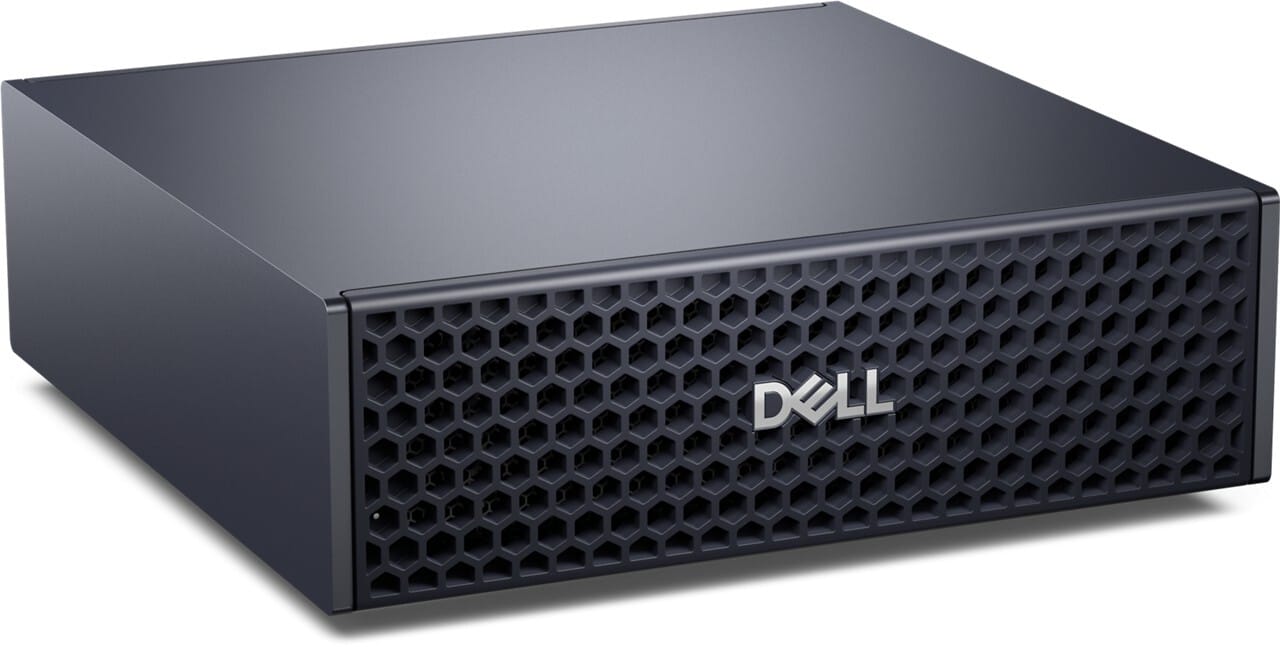
*Dell Pro Max with GB10 runs open models like NVIDIA Nemotron models entirely locally. With 128GB unified memory and 4TB storage, it handles workloads that usually require sending everything to OpenAI or Anthropic—except your data never leaves your network. Keep your data local.
Gemini 3 Flash is Google's new default model in Gemini that combines frontier-level intelligence with 3x faster speed; upload a golf swing video and get instant improvement tips, describe an app idea with your voice and watch it code a working prototype, or analyze images and audio to create custom study plans with quizzes—free to try.
Wan 2.6 generates 15-second 1080p videos with multiple connected shots (upload a 5-second clip of your friend, type “make them dance in the rain,“ and watch the model recreate them across three camera angles with synced audio and lip movements)—try it here.
Leona Health organizes the flood of WhatsApp messages Latin American doctors receive from patients (prioritizing urgent health requests, deprioritizing admin questions), saving docs 2-3 hours daily (raised $14M).
QualGent generates test plans from your PRD or Figma file, then runs those tests 24/7 like an army of QA engineers (tests push notifications, GPS, camera permissions, multi-app flows)—claims 3x the output of manual QA teams.
PolyAI answers phone calls for companies like Marriott and FedEx, and resolves issues in natural conversation, handles 2,000+ live deployments doing the work of 1,000+ employees each (raised $86M).

Around the Horn

Oh joy! Robot worms! “My, what a delightfully horrifying form factor to eat you with…” (it’s actually sick… in both ways)
Waymo could be about to raise as much as $10B+ in a new round valuing the company at $100B+, according to The Information; Waymo completed 14M rides in 2025 and plans to reach 1M rides a week by end of 2026.
OpenAI will soon partner with Apple Music so you can create playlists via the app directly inside ChatGPT.
Databricks raised $4B at a $134B valuation (up ~34% from its $100B valuation three months earlier) as demand for its AI + data platform is surging.
1X partnered with Swedish private equity giant EQT to deploy up to 10K Neo humanoid robots to EQT's 300+ portfolio companies between 2026-2030 for industrial applications.

FROM OUR PARTNERS
Shoppers are adding to cart for the holidays

Over the next year, Roku predicts that 100% of the streaming audience will see ads. For growth marketers in 2026, CTV will remain an important “safe space” as AI creates widespread disruption in the search and social channels. Plus, easier access to self-serve CTV ad buying tools and targeting options will lead to a surge in locally-targeted streaming campaigns.
Read our guide to find out why growth marketers should make sure CTV is part of their 2026 media mix.

Midweek Wisdom
Garrison Lovely wrote an excellent recap of the competing philosophical sides of the AI industry; doomers vs realists vs maxis (my phrasing), each trying to cede turf from the other as realism (and talk of an AI bubble) slowly lets air out of the giant Manhattan-sized Zeppelin that is AI hype (full collection here).
AI voice clones have flooded podcast platforms, with one studio claiming it generated 200,000 episodes so cheaply it could profit on tiny niche audiences.
JPMorgan Chase CEO Jamie Dimon told Fox News that AI will eliminate jobs but advised people to develop critical thinking, emotional intelligence, communication, and writing skills to get “plenty of jobs.“
Joseph Gordon-Levitt warned at Utah's 2025 AI Summit that AI could leave society “lacking empathy“ if it replaces real human connection, particularly affecting children.
Simon Willison shared his hands-on experience testing Skills in ChatGPT, and how to use them with Codex.

A Cat’s Commentary

‘Nuff Said

 | That’s all for now.
|