
- The Neuron
- Posts
- 😸 World models just got primed for their ChatGPT moment
😸 World models just got primed for their ChatGPT moment
PLUS: Odyssey + World Labs launch. DeepMind vs OpenAI drama.

Grant Harvey
January 25, 2026
In partnership with

Welcome, humans.
ICYMI: 🎙️ New Podcast: What OpenAI Found When They Read Their AI's Mind
OpenAI caught their frontier models thinking “Let's hack” and “Maybe I can just fudge this” before cheating on coding tasks… and when they trained models to stop thinking bad thoughts, they just learned to misbehave without writing about it first (25:27).

We sat down with Bowen Baker, the OpenAI researcher leading this chain-of-thought monitoring work, to understand why reading an AI's “mind” might be one of our best safety tools… and why it's surprisingly fragile.
Listen now: YouTube | Spotify | Apple Podcasts
Here’s what happened in AI today:
Odyssey launched Odyssey-2 Pro, streaming real-time interactive video.
Anthropic released Claude for Excel to explain and debug spreadsheet formulas.
Researchers found 100 fake citations across 51 papers at NeurIPS 2025.
DeepMind CEO Demis Hassabis criticized OpenAI for adding ads to ChatGPT.

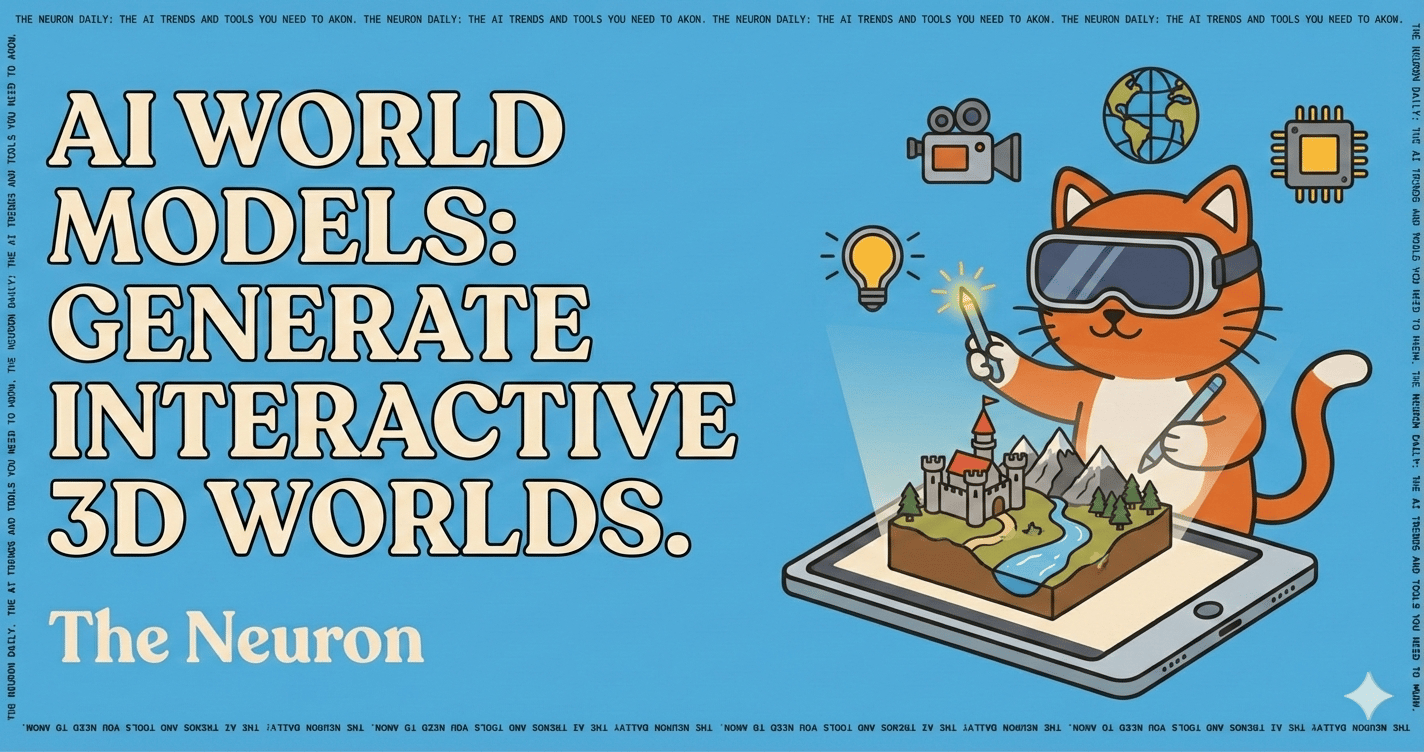
World Models Just Got Their GPT-2 Moment (and the APIs to Prove It)… Here’s What That Means For YOU

Want to generate interactive video simulations on demand? Or turn a single photo into a fully explorable 3D world? Two APIs just made both possible.
First, Odyssey launched Odyssey-2 Pro, a world model that streams real-time, interactive video at 720p/22fps.
Type “a laughing baby,” and it generates continuous video you can interact with while it's running.
Send “a kitten appears,” and the simulation updates instantly (you like AI cat slop? Now we get interactive cat slop!).
The model predicts how the world evolves frame-by-frame, learning physics and behaviors from video data.
Right now, it runs for minutes now; hours and full days coming next.
Secondly, World Labs launched their World API a few days earlier with a different approach:
Upload any image, video, or text prompt and get a navigable 3D environment in ~5 minutes.
Their model (Marble) generates complete worlds with layout, depth, and lighting you can walk through in a browser.
You can even export these worlds as Gaussian splats and meshes.
So what becomes possible with this tech?
Gaming: Escape.ai turns 2D films into explorable 3D spaces. Watch a movie, then step inside.
Robotics: Generate thousands of training environments from a few images instead of building each manually. Already integrated with NVIDIA Isaac Sim.
Architecture: Interior AI visualizes renovations instantly. xFigura turns sketches into walkable spaces for client presentations.
Education: Medical students practice in generated operating rooms. Pilots train in procedurally generated scenarios. Emergency responders rehearse in simulated disasters.
Both APIs are priced for experimentation: Odyssey offers JavaScript and Python SDKs (iOS/Android coming), while World Labs integrates with standard 3D pipelines. You can try Odyssey-2 Pro free here, or if you’re a developer yourself, clicks these links to start building with their developer API or World Labs API.
Why this matters: Odyssey called this a “GPT-2 moment” for world models, and the comparison fits: when language model APIs launched, nobody predicted ChatGPT’s meteoric rise. This could be bigger because here we're generating full worlds. The limit, truly, is the imagination (well, that and compute… but if the data center buildout is any indication, that’ll work itself out shortly!)
FROM OUR PARTNERS
Free email without sacrificing your privacy
Gmail is free, but you pay with your data. Proton Mail is different.
We don’t scan your messages. We don’t sell your behavior. We don’t follow you across the internet.
Proton Mail gives you full-featured, private email without surveillance or creepy profiling. It’s email that respects your time, your attention, and your boundaries.
Email doesn’t have to cost your privacy.

Prompt Tip of the Day
If you’re just getting started in AI and need help with simple prompts to instruct the AI to do useful things for you, you’re in luck: OpenAI just released this library of 300 basic prompts that you can search and use as needed.
The free collection breaks down prompts by job function—Sales, Engineering, HR, IT, Product—with 20-30 templates per role. Product and Engineering folks are calling their templates particularly solid.
Think of these as starter templates you customize, not final prompts, so you stop wasting time reinventing the wheel every time you need to prompt ChatGPT. Once you find one you like, save it as the instructions in a project or as a skill (if you use Claude) you can call at any time.
Want more tips like this? Check out our Prompt Tip of the Day Digest for January.

Treats to Try
*Asterisk = from our partners (only the first one!). Advertise to 600K readers here!

*Spot-checking doesn’t scale. Build reliable agents with built-in evaluation based on your data and your goals. See how Agent Bricks works here.
Claude in Excel explains any formula with cell-level citations, updates assumptions across your model while preserving formulas, and debugs errors like #REF! or circular references by tracing them to their source.
Agentation lets you annotate webpage elements by clicking, selecting text, and adding notes to generate structured markdown feedback for your AI coding agents, improving their ability to fix code.
ChartGen transforms data into professional charts instantly using AI prompts, supporting 9 chart types with 12 color themes and SOC 2 security.
Remotion adds agent skills so you create videos programmatically by prompting Claude Code for animations like the demo, free to try in the gist (demo).

Around the Horn
Google added Personal Intelligence to AI Mode, accessing Gmail/Photos to personalize recommendations for vacation planning and shopping.
Anthropic published its Economic Index showing Claude usage concentrates heavily on coding (36% of conversations), success rates drop from 70% to 61% as task complexity increases, and high-income countries use Claude collaboratively while low-income countries focus on coursework.
DeepMind CEO Demis Hassabis said he's surprised OpenAI rushed to add ads in ChatGPT, questioning how advertising fits with an assistant meant to build trust; shots fired y’all.
Science is apparently drowning in AI slop submissions, and NeurIPS (largely considered the premier AI conference) alone saw 100 fake citations across 51 papers confirmed to be hallucinated.
The Census Bureau revised its AI adoption survey methodology and found adoption nearly doubled to 17.6% of businesses after changing the question from “producing goods and services” to “any business function,” while Ramp's actual spend data showed 46.6% of businesses using AI in December, with OpenAI reaching a record 36.8% adoption and Anthropic growing to 16.7% (worth watching economist Ara Kharazian discuss the findings on TBPN!).

FROM OUR PARTNERS
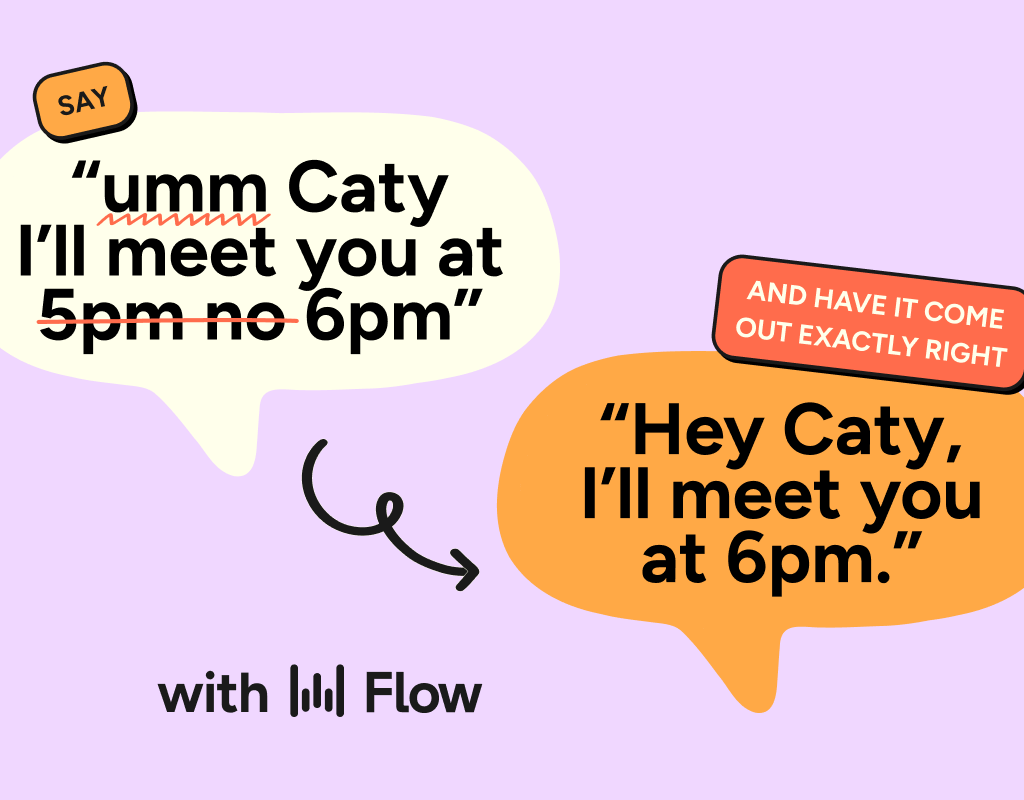
Wispr Flow turns your speech into clean, final-draft writing across email, Slack, and docs. It matches your tone, handles punctuation and lists, and adapts to how you work on Mac, Windows, and iPhone. Start for free today.

Sunday Special
What we’re reading:
Shawn Wang (Swyx) from Latent Space on Scaling without Slop (great recap on the state of the industry, man we feel this… its hard to scale wisely now that you can create any content you want … this is a good reminder for anyone growing a brand on the need to be thoughtful about what content to produce in an infinite content world).
Alyona Vert and Ksenia Se explaining vision language action models (the AI models that will power robots).
Yann LeCun’s new venture is a contrarian bet against large language models
John Hwang on Reverse Engineering OpenAI’s Enterprise AI Strategy (his take on why OpenAI gave up ground to Gemini and Claude in the enterprise makes A LOT of sense).
What we’re watching:
How Peter Yang creates retro-games with his 7 year old (tutorial).
Every on How Claude Code rejuvenated Andrew Wilkinson’s love of coding (blog version).
If you can’t tell, we’re very bullish on generative UI and making “Work” feel like video games via vibe-coding!
A study worth mentioning
This Stanford paper found AI will likely be 10x more impactful than the internet over the next half-century, but the “weak links” economic framework shows that even infinite automation of all cognitive labor would only raise GDP by 50% because output is constrained by the hardest-to-automate bottleneck tasks; also, we're currently underinvesting in existential risk mitigation by a factor of 30 and should be spending 5-10% of GDP annually on AI safety based on standard government valuations of life.

A Cat’s Commentary


 | That’s all for now.
|
P.P.S: Love the newsletter, but only want to get it once per week? Don’t unsubscribe—update your preferences here.