- The Neuron
- Posts
- 😸 Investor Gavin Baker: context beats IQ in AI
😸 Investor Gavin Baker: context beats IQ in AI
PLUS: 🎁 What's Santa Sam dropping next week? 🎄

Grant Harvey
December 14, 2025


Welcome, humans.
OpenAI just dropped the most Silicon Valley thing ever: a merch store with homework.
To celebrate 10 years of existence, they launched supply.openai.com with 10 hidden easter eggs scattered throughout the site. Think digital scavenger hunt meets online shopping—except instead of just buying a hoodie, you're dragging basketballs into trash cans and hunting for secret stickers.
But here's the twist: this might just be the appetizer. Sam Altman also teased “a few little Christmas presents for you next week”, which has the AI community spiraling into speculation mode. Image v2? Free GPT-5 Pro for a week? GPT-6? The replies are wild with theories (it for sure won’t be GPT 6 lmao).
One drop we ARE likely to see? A new image model, as it’s been spotted in the wild.

So is this easter egg hunt a distraction? A warmup? Or are the eggs themselves hints about next week's announcements? Either way, OpenAI's out here making people work for both their merch and their product reveals…
Here’s what happened in AI today:
Investor Gavin Baker says AI’s next frontier is “usefulness”…then space.
Intel is in talks to acquire SambaNova for $1.6B
OpenEvidence is raising at a $12B valuation
Sam Altman said OpenAI will prioritize enterprise in 2026
P.S: We finally put together a recap of our fantastic two hour sit-down with the co-founders of Artificial Analysis, our favorite AI benchmarking resource. Tons of great insights in this one. Give it a skim!

Gavin Baker (paraphrasing): Being “smart” is overrated. AI needs to get USEFUL

We kept seeing quotes from this interview w/ tech investor Gavin Baker on Patrick O'Shaughnessy’s Invest Like The Best pod shared around all week, so we thought we’d take a watch and highlight our favorite parts as part of this weekend’s deep dive.
Why you should care: Because Gavin cares A LOT about AI… and he knows A TON about every aspect of the industry from the chips to the interface layer.
The standout section for us (besides the space data center stuff, though Jen Zhu has notes on that) argues that we are reaching a point of diminishing returns on raw “intelligence.”
Unless you are asking deep questions about semiconductor physics, it is getting hard to tell the difference between the top models. The next phase of AI isn't about IQ; it’s about “usefulness.”
See, Baker says the transition from “Smart Chatbot” to “Useful Agent” relies on three specific building blocks:
Massive Context: Usefulness requires memory. If you ask an AI to book a vacation, it shouldn't just know “beach.“
Gavin’s example: For him, it needs to know he follows Andrew Huberman (so he needs an East-facing balcony for morning sunlight) and that he refuses to fly on planes without Starlink.
Reliability: The model can't just hallucinate a flight time. It needs to be boringly consistent.
Task Length: We are moving from “Make me a reservation“ (saves 5 mins) to “Plan this entire trip for my extended family“ (saves 5 hours).
WHY IT MATTERS: This is the “ROI handoff.” Raw intelligence is cool, but Context is the moat. Baker predicts that as context windows expand, AI will eventually hold every Slack message, email, and company manual you’ve ever written in its working memory; turning it into the ultimate Chief of Staff.
He also thinks this transition has huge ramifications for SaaS companies, who face a lesser of two evils bet on deploying agents at the cost of their margins to compete with VC-funded upstarts who will gladly outspend them, or risk total business extinction.
He had a lot more to say about Google, xAI, NVIDIA, AI ROI, and of course, space data centers. Definitely worth a full watch (and read our favorite parts here).

FROM OUR PARTNERS
The facts are in. AIoT is reshaping industrial efficiency, security and decision making.

The Artificial Intelligence of Things (AIoT) is transforming industrial operations, enabling smarter, faster and more autonomous decisions while accelerating performance across the enterprise.
AIoT has moved from promise to performance, delivering measurable efficiency, resilience, safety and decision speed. With adoption rising and benefits scaling for heavy users, the study suggests that the time to act is now.
Explore these findings and more from a global study on how leading manufacturers and energy organizations are leveraging AI and IoT to drive efficiency, accelerate innovation, and enhance their competitive advantage.

Prompt Tip of the Day
This Reddit thread has some solid prompt engineering tips, especially around using shorthand tokens to structure prompts more efficiently.
However, not all of it is useful, as Reddit user SwissDadMeister’s break down showed: ~40% work well, ~40% are cosmetic relabels, and ~20% are illusory/marketing fluff.
Here’s what’s useful:
The concept of prompt shortcuts/tokens - Using abbreviations like ELI5, TL;DR, STEP-BY-STEP, CHECKLIST as quick commands
The stacking technique - Combining multiple tokens with pipes: “SIMPLIFY | HUMANIZE | FORMAT AS: Bullet points”
Reliable structural prompts - The foundational ones (ELI5, OUTLINE, FRAMEWORK) and analytical ones (SWOT, PRE-MORTEM, COMPARE).
And what's NOT useful:
The “experimental tokens“ section (THOUGHT_WIPE, ZERO-IMPRINT, etc.) - these are basically fiction.
Overhyped claims about “secret tricks“ and “power commands.“
Some of the “cognitive simulation“ modes that don't actually work as advertised.
The real insight = Structure beats symbolism. The tokens that work are ones that describe OUTPUT FORMAT (tables, lists, steps) and ANALYTICAL FRAMEWORKS (SWOT, compare) to help you get AI responses formatted the way you need.

Treats to Try
*Asterisk = from our partners (only the first one!). Advertise to 600K readers here!
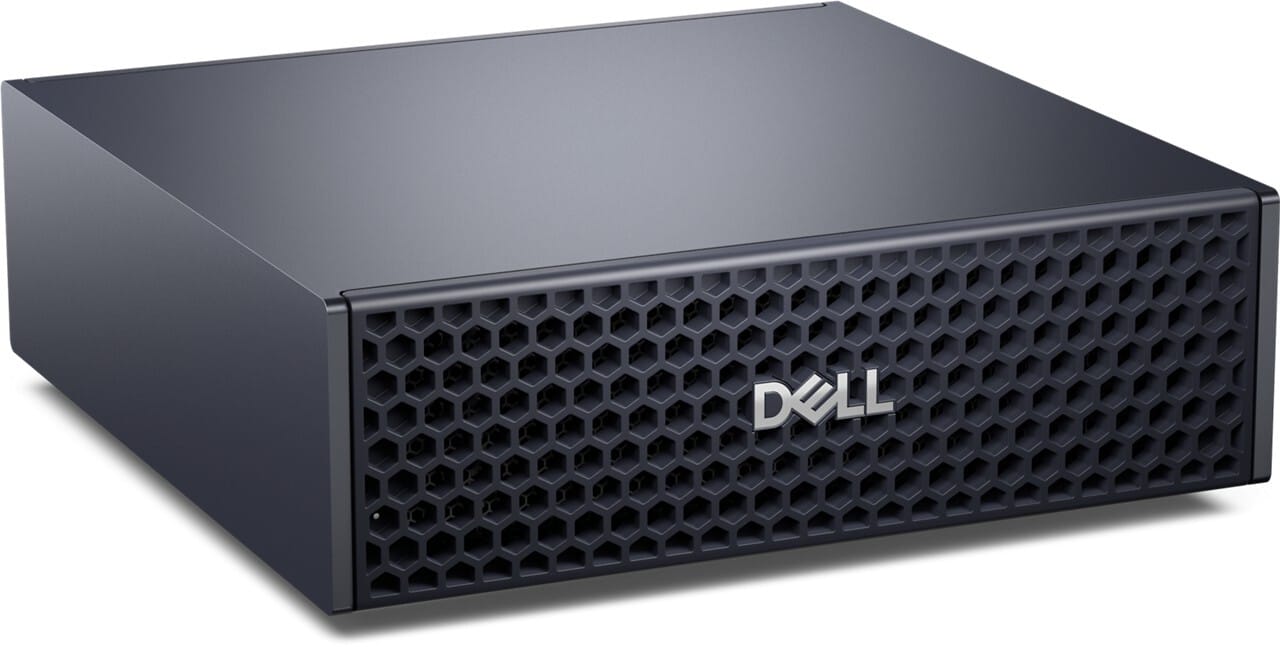
*Prototype on your desk, then deploy to the cloud. Dell Pro Max with GB10 uses the same NVIDIA DGX architecture as datacenter systems, so your code works when you scale up. Develop locally, test RAG pipelines on 128GB of unified memory, then deploy to production without rewriting anything. Check it.
Cursor can now design directly in your codebase; select elements, modify them visually, and Cursor writes the code.
Tinker is now generally available, and it turns model fine-tuning an AI model for your use-case into an API so you can run custom post‑training workflows without owning the infrastructure required to do so.
It added Kimi K2 Thinking, OpenAI‑API‑compatible inference (including sampling from checkpoints mid‑training), and vision input via Qwen3‑VL.
Brian Zhan said the only downside is this doesn’t seem good for small models, but Phillip Moritz recommends using this model for small/custom models, which he says works quite well.
Zoom claimed a new Humanity’s Last Exam full‑set SOTA of 48.1% using a “federated AI” system that mixes small and frontier models.
Shortcut builds and edits Excel spreadsheets from plain English (formulas, cleanup, and full models) so you can go from “make me a forecast” to a working file fast.
Manus now has Nano Banana Pro to turn an outline into an editable slide deck (PPTX/PDF/Google Slides) so you can start from a real draft instead of a blank template.

So like, does anyone still use Sora?
I check it every now and then, and there’s some funny stuff from time to time. But it’s definitely not a need to go destination because it’s all so random. We’ll see how the Disney partnership plays out (that was wild huh?) and how soon we’ll see Disney character show up on there. What about you?
Y'all using Sora? yay or nay? |
In case you do use it, try some of these new prompt styles out:

Interesting stuff from earlier this week
Sam Altman said OpenAI would prioritize enterprise in 2026, signaling a bigger push from “cool models” to “sellable workflows”; interestingly, OpenAI will also debut its new “adult mode” (capable of “erotica”) in Q1 of 2026…though I doubt they’ll be part of the same initiative LOL.
Google rolled out a beta of live speech‑to‑speech translation that works with any headphones (Translate for Android in the U.S., Mexico, and India).
Intel was reported to be in advanced talks to acquire AI chip startup SambaNova for about $1.6B including debt.
OpenEvidence was reported to be raising at a $12B valuation as annualized advertising revenue hit $150M (tripling since August).
OpenAI said a four‑engineer team shipped Sora for Android in 28 days with Codex, hit #1 on Google Play, and saw Android users generate 1M+ videos in the first 24 hours (great write-up).
Every shared five patterns it learned building with Claude Opus 4.5, arguing the big unlock is models that finish projects end‑to‑end (and the new bottleneck is your taste, not your syntax).
Howard Marks argued AI can be both real AND overheated, and that financing structure (cash vs leverage) is where bubbles become dangerous.
Anand Sanwal argued AI cheating is now normalized and that schools can’t out‑police ubiquitous AI, so assessment has to change.
Read more of our finds from around the web in our December AI Digest!

A Cat’s Commentary

 | That’s all for today!
|
